
Link building remains one of the foundational pillars of search engine optimization. Webmasters, content marketers, and SEO strategists constantly seek effective methods to increase domain authority and improve search engine rankings. While earning organic editorial backlinks through exceptional content is the ideal scenario, it requires substantial time and resources. Consequently, webmasters often explore strategic link exchange partnerships to accelerate their growth.
One of the most discussed tactics in modern link outreach is the ABC link exchange. Unlike traditional direct swaps, this method provides a structured approach to trading backlinks while minimizing direct search engine footprints. Understanding the mechanics, benefits, guidelines, and risks associated with this technique is essential before deciding whether to incorporate it into your digital marketing campaign.
What Is ABC Link Exchange?
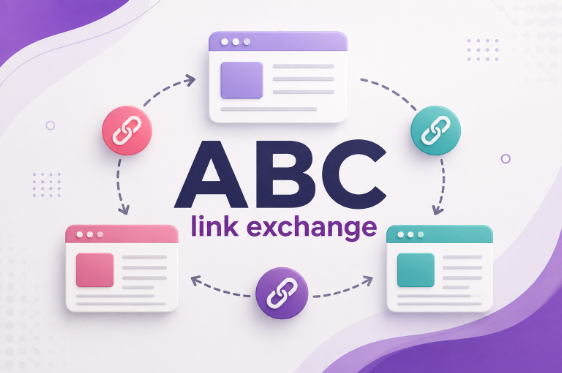
An ABC link exchange is a strategic link-building tactic where three distinct, independently owned websites swap backlinks in a circular pattern so that no two domains link directly back to one another. Within search engine optimization communities, this practice is frequently referred to as a three-way link swap or a triangular link exchange.
To fully appreciate this concept, it helps to look at standard link exchanges first. In a traditional two-way reciprocal link swap, Website A links directly to Website B, and Website B immediately places a link pointing back to Website A. Search engine algorithms easily detect this direct reciprocity. When search crawlers see two sites linking back and forth repeatedly, they often diminish the equity passed by those links or classify them as artificial trades.
An indirect link exchange solves this footprint issue by introducing a third intermediary domain into the arrangement. By distributing the outbound and inbound links across three distinct sites, webmasters create a non-reciprocal appearance that looks far more natural to automated search crawlers.
How ABC Link Exchange Works
The foundational mechanics of an indirect link exchange rely on a precise three-point structure. By separating the site giving the link from the site receiving the link, the direct two-way chain is completely broken.
Here is a step-by-step breakdown of how a typical ABC link building loop functions in practice:
- Step 1: Website A publishes an article containing a contextual backlink that points directly to Website B.
- Step 2: Website B creates relevant content on its own platform and includes a contextual backlink that points to Website C.
- Step 3: To complete the arrangement, Website C publishes a piece of content that includes a backlink pointing back to Website A.
Through this simple circular pathway, every participating webmaster receives a valuable incoming backlink without ever having to link directly back to the domain that provided it. The resulting structure represents a classic 3-way link exchange.
When search engines crawl Website A, they observe an outgoing link to Website B, but they do not find a direct incoming link from Website B. From an algorithmic perspective, this breaks the obvious reciprocal pattern that usually triggers link trading filters.
Why Businesses Use ABC Link Exchange
Managing modern website visibility requires building a steady stream of authority signals. Many digital businesses and SEO agencies utilize a three-way link swap framework for several practical reasons:
Mitigating Direct Reciprocal Footprints
The primary motivation behind setting up a three-way network is avoiding the obvious footprint associated with direct reciprocal link swaps. Search engine algorithms are specifically trained to identify simple A-to-B and B-to-A link exchanges. By routing the link through an intermediate domain, site owners reduce the risk of automated filters flagging their backlink acquisition efforts.
Accelerating Authority Growth
Earning organic editorial links purely through outreach or passive content consumption can take months. Coordinating an ABC link building agreement allows site owners to secure high-authority backlinks much faster. This predictability helps new websites establish initial domain trust and rank for competitive keywords within reasonable timeframes.
Diversifying Backlink Profiles
Search algorithms favor websites that display diverse backlink profiles originating from various IP addresses, subnets, and unique domain authorities. Engaging in strategic cross-linking partnerships enables webmasters to acquire links from unique sites they might not otherwise connect with through standard email outreach.
Is ABC Link Exchange Safe or Against Google Guidelines?
Evaluating the safety of any link-building tactic requires comparing it against search engine webmaster guidelines. Google explicitly states that any action intended to manipulate PageRank or a site’s search result ranking may be considered part of a link scheme. This includes buying links, excessive reciprocal exchanges, and using automated programs to generate backlinks.
Because a triangular link exchange involves a deliberate agreement between webmasters to pass link equity, it technically falls under the category of non-standard link acquisition. Therefore, it is important to understand how search engines evaluate these networks:
- Pattern Recognition: Modern search crawlers do not merely analyze two domains in isolation; they map out complex link graphs across the entire web. If the same group of websites repeatedly engages in three-way exchanges, automated systems can eventually map the network footprint.
- Contextual Quality: If an indirect link exchange takes place between completely unrelated niches using low-quality or irrelevant content, search engine algorithms will quickly identify the placement as unnatural and neutralize its value.
- Scale and Frequency: Swapping a few contextual links across high-quality, relevant platforms carries relatively low risk. However, attempting to scale three-way exchanges artificially across dozens of low-tier sites will inevitably trigger search penalties or loss of indexation.
Pros of ABC Link Exchange
When executed with proper planning, high editorial standards, and relevant partner websites, an ABC link exchange offers distinct operational advantages over traditional link swaps:
Complete Removal of Two-Way Reciprocal Signals
The most obvious advantage is the elimination of the direct two-way link loop. Because Website A never receives a link from Website B, search engines cannot automatically flag the interaction as a simple reciprocal trade.
Enhanced Domain and Topical Diversity
Participating in a three-way arrangement exposes your platform to new publishing networks. Instead of repeatedly trading with the same industry partners, you gain access to a wider variety of domains, unique C-block IP addresses, and diverse audience bases within your broad vertical.
Valuable Networking Opportunities
Coordinating successful three-way link partnerships requires communicating with other content managers, webmasters, and SEO professionals in your industry. Over time, these operational relationships can open doors for legitimate guest blogging, joint webinars, co-marketing projects, and digital PR collaborations.
Risks and Downsides
Despite its clear structural advantages over direct link swapping, utilizing a three-way link swap approach involves notable operational challenges and strategic risks:
Complex Network Footprints
While a single three-way trade is difficult for search algorithms to spot, repeating this pattern at scale creates detectable footprints. Advanced machine learning models can identify circular link paths, shared analytics IDs, similar hosting servers, or recurring anchor text patterns across participating websites.
Inconsistent Quality Control
In a three-way exchange, you rely on the quality and integrity of two other webmasters instead of just one. If Website C operates a spammy blog, uses aggressive private blog networks, or publishes low-quality AI content, the backlink you receive from Website C could end up harming your search authority rather than helping it.
High Operational Management Overhead
Organizing, verifying, and maintaining an ABC link-building network requires significant manual effort. You must pitch multiple webmasters, verify domain metrics, ensure articles are published correctly, monitor anchor text placements, and periodically check if partners keep your live links indexed.
ABC Link Exchange vs Traditional Link Building
Understanding how an indirect link exchange compares to traditional white-hat link acquisition strategies is crucial for long-term SEO planning.
| Feature | ABC Link Exchange | Traditional Link Building (Outreach/PR) |
| Primary Mechanism | Pre-agreed 3-way swap between webmasters. | Organic outreach, guest blogging, or digital PR. |
| Footprint Risk | Moderate; depends on network scale and domain quality. | Very low; links are earned or placed editorially. |
| Time to Acquire | Fast; based on direct mutual agreement. | Slow; relies on content approval and outreach responses. |
| Topical Alignment | Variable; depends on partner availability. | High; focused strictly on relevant niche publications. |
| Algorithmic Safety | Requires careful monitoring and low volume. | Highly safe and long-term sustainable. |
Traditional outreach techniques, such as publishing original data studies, creating interactive tools, or writing comprehensive guest guides, produce natural editorial mentions that carry zero algorithmic risk. While an ABC link exchange offers faster short-term turnarounds, standard editorial link building remains the safest long-term foundation for sustained search visibility.
Best Practices If You Try ABC Link Exchange
If you decide to utilize a triangular link exchange as a supplementary tactic within your overall SEO strategy, implementing strict quality control protocols is essential. Following these practical guidelines will minimize your exposure to search engine penalties:
1. Maintain Strict Topical Relevance
Never trade backlinks with websites that operate outside your broader industry umbrella. If your website focuses on SaaS software, ensure your three-way link partners publish content related to technology, business management, or digital marketing. Contextually relevant links provide maximum search engine value and look completely natural to human readers.
2. Prioritize High-Quality Editorial Content
Avoid placing exchange links inside low-effort blog posts, thin articles, or dedicated “resources” pages that exist solely for link swapping. Ensure every backlink is embedded naturally within a comprehensive, well-researched, and original article that provides genuine value to users.
3. Use Natural and Varied Anchor Texts
Over-optimizing your anchor texts with exact-match commercial keywords is one of the fastest ways to trigger search engine penalties. Maintain a natural anchor text distribution that includes branded terms, partial-match phrases, descriptive sentences, and natural contextual anchors.
4. Thoroughly Audit Partner Websites
Before agreeing to any cross-linking arrangement, perform a thorough SEO audit of all participating domains. Check domain authority metrics, organic search traffic trends, spam scores, outbound link ratios, and indexation status. Never accept links from domains displaying sudden traffic drops, artificial link farms, or unnatural outbound link spikes.
5. Keep Exchange Volumes Moderate
Do not rely on three-way link swaps as your sole source of backlink acquisition. An indirect link exchange strategy should only constitute a small percentage of your overall link portfolio. Balance exchange links with genuine editorial mentions, natural guest posts, unlinked brand mention reclamations, and organic citations earned through valuable content creation.
Final Thoughts
The ABC link exchange represents a clever, structured evolution of standard link trading practices. By breaking direct two-way footprints through a three-way link swap, webmasters can acquire valuable contextual backlinks while reducing the immediate detection risks associated with basic reciprocal swaps.
However, search engine algorithms continue to evolve, using advanced graph analysis to evaluate link quality, relevance, and network patterns. While ABC link building can serve as an effective tactical bridge for growing websites, it should never replace a genuine, value-first content strategy.
For sustainable organic growth, focus your primary efforts on creating exceptional web content, earning authoritative digital PR citations, and building real relationships across your industry.
Ali Haider
Ali Haider is a Link Building Manager with 7 years of experience in SEO, digital outreach, and authority-building strategies. He specializes in developing effective link acquisition campaigns, managing outreach processes, and helping websites improve their online visibility through sustainable SEO practices.