
A well-known study of 11.8 million Google search results found that roughly 95 percent of all web pages have zero backlinks pointing to them at all. That single fact says a lot about how much links matter, since the pages that do earn them tend to rank far better than the ones that never do.
When search engine tools crawl the internet to discover new websites, they rely on small clickable paths called hyperlinks. If you want your website to show up when people search for topics online, learning about the different types of links in SEO is one of the most important steps you can take.
Search engine optimization, or SEO for short, is the practice of setting up your website so platforms like Google can read your pages easily and show them to real readers. This complete guide will break down how online connections work using clear and easy language.
What Is a Link in SEO and How It Works
A link, often called a hyperlink, is a clickable piece of text or an image that takes a user from one web page to a totally different web page. When you hover your cursor over a blue underlined word on a website and click it, your web browser opens a new document.
In digital marketing, these clickable paths act like online votes of trust. Search engines use special automated computer programs called software crawlers to scan web pages. These crawlers follow links from page to page across the web, mapping out how websites connect.
When a site gets many quality votes from other websites, search tools assume that site contains helpful information. Knowing how to use various types of links in SEO allows site owners to direct both human visitors and search crawlers to their best content.
Core Directional Link Types Every Beginner Should Know
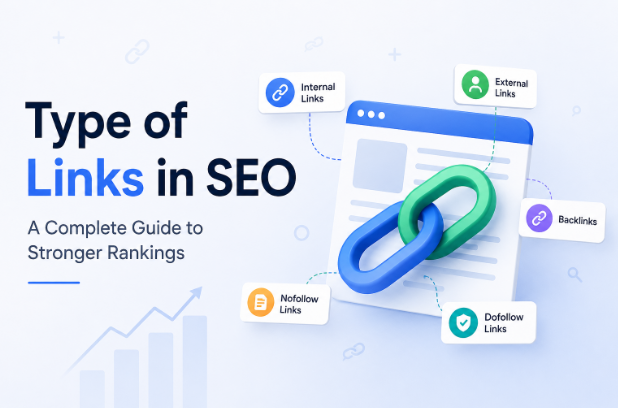
Before looking at technical setups, it helps to understand link directions. Links move people around in three basic ways.
1. Internal Links That Connect Your Own Pages
An internal link connects two pages on the very same domain name. For example, if you write a blog post about dog food on your site and add a link pointing to your contact page on that same site, that is an internal link.
These connections help readers find related content easily without leaving your site. They also show search engines how your website is organized, helping crawlers index every page smoothly.
2. External Links That Point to Outside Websites
An external link, also known as an outbound link, is a link on your site that points visitors away to a totally different domain. For instance, if you write an article about health and link directly to a research paper on a medical university site, you have created an external link.
Sharing reliable external resources shows readers that your information is well-researched, which builds trust with your audience.
3. Backlinks That Bring Traffic From Other Platforms
A backlink, or inbound link, is a link located on an outside website that points directly back to your web pages. If an online newspaper writes a story about your local shop and includes a clickable link to your home page, you just earned a backlink.
These incoming links are among the most powerful signals search engines use to calculate website popularity. Learning about the primary types of links in SEO helps site creators understand why building a clean network of inbound connections matters so much for online success.
Technical Attributes That Control How Search Engines Treat Links
Every hyperlink contains hidden pieces of website code called HTML tags. These tags tell search engine crawlers how to treat the link when passing authority or website trust from one place to another.
a) Dofollow Links That Pass Page Strength and Trust
A dofollow link is a standard web link that allows search engines to pass value, often called link juice, from the linking page over to the destination page. By default, every link you create on a site is dofollow unless you manually change its code settings.
Understanding dofollow and nofollow links is critical because dofollow connections act as direct recommendations that help target pages rank higher in search results.
b) Nofollow Links That Tell Search Engines Not to Pass Value
A nofollow link contains a tiny snippet of code (rel=”nofollow”) that tells search engines not to pass authority value to the target page. While human visitors can still click these links normally, search engines treat them as neutral connections. Sites often use nofollow tags when linking to pages they do not fully endorse or when adding links inside public comment sections.
c) Sponsored Links Used for Paid Ads and Collaborations
A sponsored link uses a specific code attribute (rel=”sponsored”) designed for paid advertisements, affiliate promotions, or paid banner placements. Search engines require web owners to mark paid connections clearly so that companies cannot buy search rankings artificially.
d) User-Generated Content Links From Comments and Forums
A user-generated content link uses the tag rel=”ugc” to mark connections created by website visitors rather than the site editor. You commonly see these tags applied to links inside blog comment threads, discussion forums, or customer review boards.
High Value Backlink Types for Earning Top Search Rankings
Not all incoming links carry the same power. Exploring different backlink types in SEO reveals which placements deliver the greatest boost to your web authority.
Organic Editorial Links Earned Without Asking
An organic editorial link is a link a site owner gives you naturally because your content is helpful, interesting, or unique. These are great editorial backlink examples:
- A tech writer mentions your free online calculator tool in a news review.
- An industry blog cites your original research figures inside their article.
- An educational site references your beginner tutorial as recommended reading.
These organic mentions carry immense trust because you did not pay for them or ask for them.
Outreach Links Earning Content Placements
An outreach link is earned by contacting web editors, introducing your work, and asking them to reference your page. Content creators use various types of link-building strategies to secure these placements, such as writing guest articles for partner sites or suggesting updated links for broken pages.
Citation Links on Local Business Directories
A citation link is a web placement on a business directory site like Yelp, Google Business Profile, or local online yellow pages. These listings confirm your business name, phone number, and physical address, proving to search engines that your physical location is real and active.
Low-Quality and Risky Link Types You Should Avoid
Just as good links boost your website authority, bad links can harm your performance or trigger penalties from search engine platforms.
Automated Forum Spam Links
Forum spam links are low-quality links dropped rapidly into public message boards or blog comments using automated software tools. Search engine algorithms spot these spam patterns easily and ignore them, or they may penalize sites that use them heavily.
Paid and Irrelevant Links
Buying cheap link packages from unverified websites is dangerous. Search platforms strictly prohibit paying for link placements designed to manipulate search positions. Acquiring thousands of random links from unrelated sites hurts your online reputation and can cause your web pages to drop out of search results completely.
How to Build a Balanced Link Profile for Long-Term Growth
A link profile represents the combined collection of every single external link pointing to your site. To maintain high trust, your profile should look natural and balanced.
Diversifying Your Link Types and Anchor Text Patterns
Anchor text is the visible, clickable text contained within a hyperlink. For example, if a link says “click here for security tips,” the phrase “click here for security tips” is the anchor text.
A healthy website profile features different kinds of inbound links using varied anchor text formats, including your brand name, direct web addresses, and natural descriptive phrases. Having a healthy mix of dofollow and nofollow links from multiple websites keeps your growth looking natural.
Auditing Your Link Profile to Remove Spam Connections
Running regular backlink audits helps you spot spammy or suspicious websites linking to your content without your permission. Research shows that 43.7% of top-ranking search pages contain some form of reciprocal links where sites swap connections.
Auditing allows you to evaluate your connections and use disavow tools to tell search platforms to ignore unwanted spam.
Combining Strong Content With Strategic Outreach
The safest way to earn high-value contextual links SEO specialists recommend is to publish helpful content worth sharing. Contextual links are links placed naturally inside body paragraphs surrounded by related text. When you combine top-tier content with polite email outreach, other publishers gladly link to your site as a trusted reference.
Conclusion
Understanding the major types of links in SEO gives you the baseline knowledge needed to build a successful website strategy. By balancing internal navigation paths, sharing quality external resources, and earning trustworthy incoming backlinks, you show search engines that your platform deserves a top spot. Focus on publishing clear, helpful content that serves real readers, and your link authority will grow steadily over time.
Frequently Asked Questions
What Are the Main Types of Links in SEO
The main types of links in SEO include internal links that connect your own pages, external links pointing to outside websites, and backlinks coming in from other domains. These can be further divided into dofollow, nofollow, sponsored, and user-generated attribute links.
Which Type of Link Is Most Important for Search Rankings
Dofollow contextual backlinks earned from trusted, authoritative websites in your niche carry the highest value for improving search engine rankings.
Do Nofollow Links Have Any Value for SEO
Yes, nofollow links bring real value. While they might not pass direct ranking authority, they drive real referral traffic to your pages, increase brand awareness, and make your overall backlink profile look natural to search engine crawlers.
Can Outbound External Links Harm Your Website
Outbound links only hurt your site if you link to low-quality, spammy, or dangerous websites. Linking out to trustworthy, authoritative websites actually improves your user experience and shows search tools that your content is well-researched.
How Many Internal Links Should You Put on a Page
There is no fixed limit for internal links, but you should only add them when they help the reader find relevant information. For a standard 1,000-word blog post, adding 3 to 5 natural internal links to related guides works great.
Ali Haider
Ali Haider is a Link Building Manager with 7 years of experience in SEO, digital outreach, and authority-building strategies. He specializes in developing effective link acquisition campaigns, managing outreach processes, and helping websites improve their online visibility through sustainable SEO practices.